
Understanding Crush-Proof Vacuum Hose Construction, Measurements, and Selection
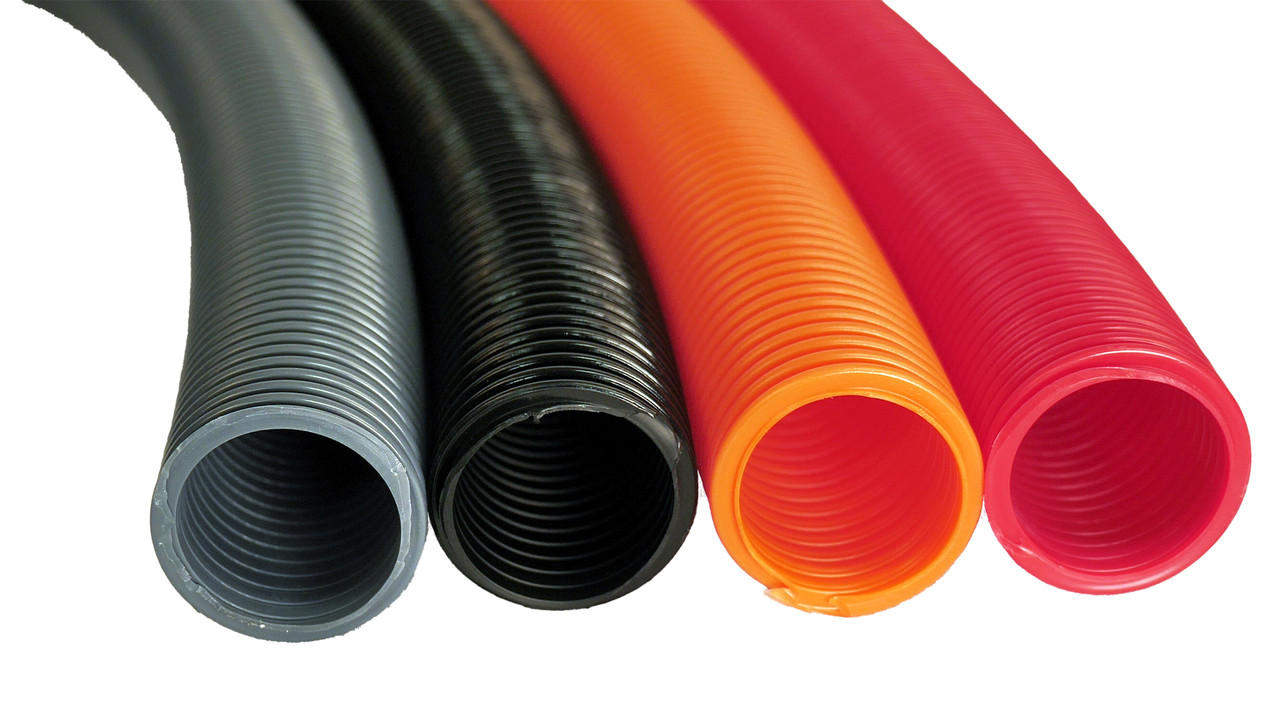
Based on 40-plus years of direct experience producing, distributing, and applying crush-proof vacuum hose in domestic floor care, commercial cleaning, dust collection, and industrial applications, it is clear that a basic understanding of hose construction, material selection, and common measurement methods can be helpful.
This information is intended for anyone trying to determine what hose they currently have, what replacement hose they may need, or what hose construction may be best for a specific application.
Helpful Terms and Measurements
The hose industry identifies vacuum hose diameter based on the inside diameter of the hose.
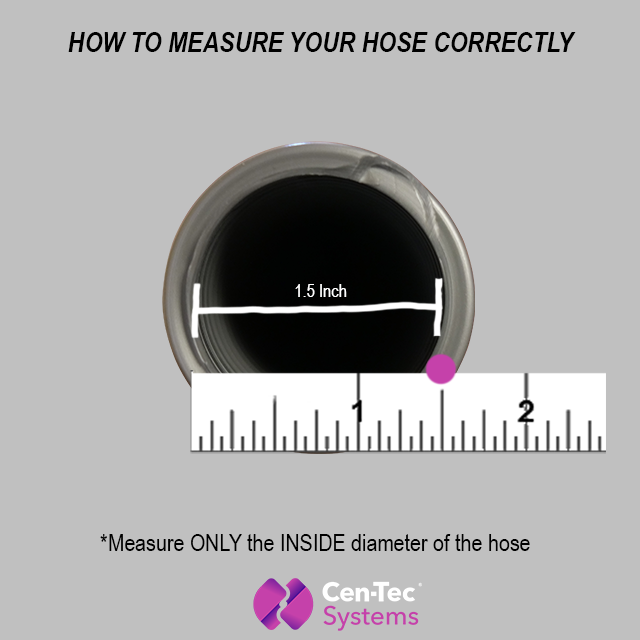
The most common error when identifying hose size is measuring or estimating the outside diameter of the hose and using that measurement to select end fittings or communicate the hose size needed.
As a general guide:
- A hose measuring approximately 2 inches on the outside diameter will most likely be a hose with a 1.50-inch inside diameter.
- A hose measuring approximately 1.50 inches on the outside diameter will most likely be a hose with a 1.25-inch inside diameter.
Marketing descriptions can also create confusion. Often, the advertised hose size does not actually describe the hose body itself. It may describe the diameter of the end fittings attached to the hose, or even the accessories sold with the hose.
For example, many home shop vacuums are advertised as having a 1-7/8-inch hose. In many cases, that measurement refers to the hose ends or accessories, not the actual hose body.
If measuring the inside diameter of the hose is difficult, the most helpful information is the inside and outside diameter of the hose ends attached to your hose. With a few exceptions, most hose ends fit male into accessories and into vacuum openings, so the outside diameter of the hose end is often the most important dimension to determine.
The Four Principal Constructions of Crush-Proof Plastic Vacuum Hose
- Blow-Molded or Vacuum-Formed Hose
A blow-molded hose is formed by extruding plastic and blowing the hot material outward against a die that forms the corrugations of the hose.
A vacuum-formed hose is formed by extruding plastic and pulling the material outward against a die using vacuum pressure to form the corrugations.
While the process used to form the material against the die is different, the result is similar: a corrugated hose where the corrugation design and material selection influence flexibility, airflow, and durability.
Most blow-molded or vacuum-formed hoses can be identified by corrugations that run perpendicular to the inside diameter of the hose. If you place a finger on one corrugation and trace it around the hose, you will return to the same starting point.
Hose ends with round barbs at the vacuum or accessory end use these corrugations to lock the end fitting into place while still allowing the fitting to rotate.
Advantages of Blow-Molded or Vacuum-Formed Construction
- Lightweight construction
- Low cost
- Radial rings allow barbed locking end adapters to fit male into the hose end
Disadvantages
- Construction tends to be less flexible
- Corrugated interior can reduce airflow and increase turbulence
- Reduced flex life compared to some spiral constructions
- Male-fitted ends reduce the internal diameter of the hose connection
- Spiral Strip Interlocking Construction
Spiral strip interlocking hose is formed by extruding a plastic strip profile that spirals down the length of the hose. The profile interlocks or overlaps and is then welded using hot material to construct the finished hose.
This strip-and-weld construction allows for more flexibility in material selection, profile height, and pitch. These variables can improve hoop strength and resistance to crushing.
The interior smoothness can be superior to blow-molded hose when the hose is designed with airflow in mind. However, this construction can create a directional airflow bias, meaning airflow may perform better in one direction than the other.
This method also allows for co-extrusion of a second material over the base profile. That second material can add properties such as abrasion resistance, hoop strength, or color options.
Advantages of Spiral Strip Interlocking Construction
- Potential for improved interior smoothness, which can aid airflow and reduce clogging
- Greater flexibility in material selection for specific properties such as flexibility, abrasion resistance, and crush resistance
- Spiral construction allows the use of threaded hose ends, increasing field customization and application flexibility
- Cost effective
Disadvantages
- The location of the overlapping weld can affect flexibility because the flex member is not uniform throughout the construction
- Airflow may be biased in one direction
- Loss of radial construction means the hose generally requires factory-welded or threaded ends, which can increase the cost of the final solution
- Spiral Hot-Formed Construction
Spiral hot-formed hose is formed as a spiral construction without the need for a secondary overlapping profile weld.
This construction increases flexibility in selecting and positioning multiple materials with specific properties within the spiral structure. Without a secondary overlapping weld, the flex member responsible for flexibility is not compromised, which can result in longer hose life.
The absence of a secondary weld also reduces the risk of weld failure caused by poor weld location or improper bonding.
A looped, omega-shaped design can produce superior airflow properties by increasing interior smoothness. A highly flexible material can be combined with a more abrasion-resistant material at specific locations within the hose pitch. This allows the hose to maintain flexibility while improving abrasion resistance and crush resistance.
Additional properties can also be introduced while maintaining other important performance characteristics. One example is the use of static-dissipative strips, which can produce a lower-cost hose with dissipative properties without compromising flexibility, flex life, or interior smoothness.
The hot-formed process also avoids building stress into the materials used in the hose construction, which can increase hose life.
Advantages of Spiral Hot-Formed Construction
- Produces a hose with no built-in stress from forming the spiral, helping extend flex life
- Uniform wall thickness throughout the construction improves flexibility
- Hot-forming allows materials with specific properties to be placed where they are most useful in the hose construction
- No overlapping weld reduces the risk of weld failure or weld placement errors that can shorten hose life
- Omega-shaped profiles improve interior smoothness without creating directional airflow bias
- Spiral construction allows the use of threaded hose ends, increasing field customization and application flexibility
Disadvantages
- Loss of radial construction means the hose generally requires factory-welded or threaded ends, which can increase the cost of the final solution
- In high-heat applications where added hoop strength is required, the omega-shaped profile can be challenged
- Two-Profile Spiral Welded Construction
Two-profile spiral welded hose is constructed using two independently extruded profiles that are combined using a hot weld to form the finished spiral hose.
Most often, this hose is built with a U-shaped interior profile to create a smooth and flexible inner surface. A second profile, usually round or square, is then applied as an outer cap to create a smoother, more abrasion-resistant and crush-resistant exterior.
This two-profile construction allows two different materials to be used in one hose. This can be helpful when the application requires a smooth, flexible interior along with an outer surface that offers temperature resistance, abrasion resistance, or crush resistance.
Advantages of Two-Profile Spiral Welded Construction
- Uniform wall thickness on the internal profile can create a flexible, smooth interior for better airflow
- The capped profile can introduce properties such as abrasion resistance, crush resistance, or higher temperature resistance
- The construction can create a smoother exterior surface, reducing surface friction when the hose is dragged over rough surfaces
- Spiral construction allows the use of threaded hose ends, increasing field customization and application flexibility
Disadvantages
- Secondary welding of two different profiles and materials can be challenging because the materials may have different melt properties
- The pinched point where the weld occurs can reduce flex life
- Two-profile welded construction generally produces a higher-cost hose
- Spiral construction usually requires factory-welded fittings or threaded end fittings, which can increase cost
Final Selection Notes
| Hose Type | Advantages | Disadvantages | Best Applications |
|---|---|---|---|
| PVC Dust Collection Hose | Low cost, lightweight, widely available | Lower abrasion resistance, can crack with age, less flexible | Hobby woodworking, light-duty dust collection, occasional use |
| Wire Reinforced Urethane Hose | Excellent abrasion resistance, highly flexible, lightweight, transparent for clog visibility | Higher initial cost than PVC | Professional woodworking, CNC routers, planers, production shops, abrasive materials |
| Static Dissipative Dust Collection Hose | Reduces static buildup, flexible, smooth airflow, excellent visibility | Higher cost than standard urethane | CNC equipment, electronics, fine dust collection, high static environments |
| Blow-Molded / Vacuum-Formed Hose | Lightweight, economical, accepts molded barbed fittings | Corrugated interior reduces airflow, less flexible, shorter flex life | Shop vacuums, general cleanup, portable vacuum systems |
The correct hose is not determined by hose diameter alone.
The best hose choice depends on:
- The inside diameter of the hose body
- The inside and outside diameter of the hose ends
- Whether the fitting must go inside or over the mating connection
- The airflow required
- The flexibility required
- The amount of abrasion or crushing expected
- Whether static-dissipative properties are needed
- Whether field customization with threaded ends is useful
- The cost target of the final solution
When replacing a hose or trying to identify what is already in use, the best first step is to measure the hose body and both hose ends carefully. Whenever possible, provide both inside and outside measurements of the hose ends, along with the vacuum, tool, or accessory being connected.