
Commercial Vacuum Squeegee Blades: How to Choose the Right Material
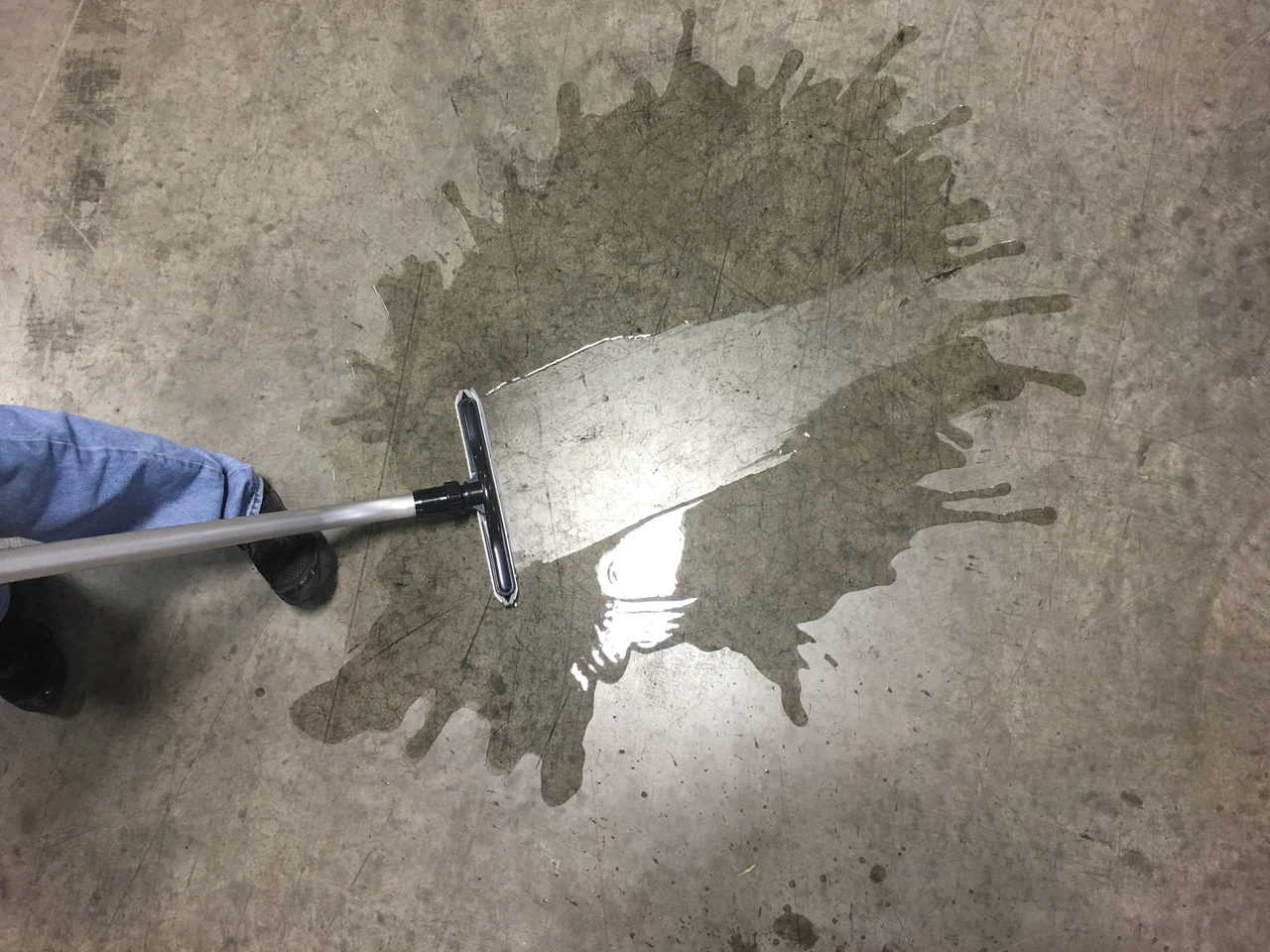
The blade is one of the most important components of a commercial or industrial vacuum squeegee. The right blade material can improve liquid recovery, withstand demanding floor conditions, and provide years of reliable service. The wrong material, however, can wear prematurely, lose flexibility, or deteriorate when exposed to oils and chemicals.
There are four common blade materials used in commercial vacuum squeegee blades: natural rubber, neoprene, TPE, and Buna-N. Each has different strengths and limitations.
Choosing the best vacuum squeegee blade starts with understanding the environment in which it will be used. Consider the floor surface, frequency of use, temperature, and exposure to chemicals, petroleum-based oils, organic oils and fats, or liquid slurries.
Commercial Vacuum Squeegee Blade Materials at a Glance
| Blade Material | Best For | Floor Conditions | Oil & Grease Resistance | Durability | Key Advantage |
| Natural Rubber | High-volume liquid recovery | Smooth to moderately varied | Low | Good | Excellent flexibility and liquid pickup |
| Neoprene | General-purpose cleaning | Smooth to rough/abrasive | Moderate | Good | Versatile performance across changing conditions |
| TPE | Frequent industrial use | Rough and abrasive | Moderate | Excellent | High durability and sharp cleaning edge |
| Buna-N | Oil, grease, and fat exposure | Smooth to rough | Excellent | Good | Resists swelling and softening from oils |
The best material depends on which characteristics matter most in your application.
Natural Rubber Vacuum Squeegee Blades
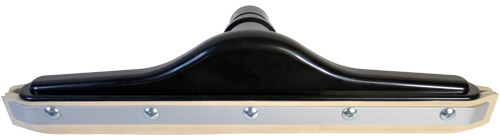
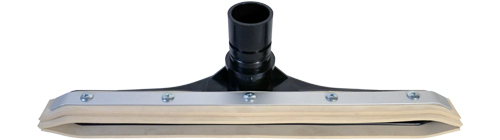
Natural rubber blades are typically identified by their tan color. They are an excellent choice when maximum liquid recovery and flexibility are priorities, particularly on smooth flooring.
Natural rubber creates relatively little drag on surfaces such as tile, vinyl, and sealed concrete. Its flexibility also allows the blade to conform to variations in the floor, including grout lines between tiles.
Natural rubber offers high tear resistance and maintains flexibility across both high- and low-temperature applications. These characteristics make it a strong choice for many commercial cleaning environments.
Best Applications for Natural Rubber
Natural rubber vacuum squeegee blades are well suited for:
-
Schools
-
Hospitals and healthcare facilities
-
Offices
-
Pet care facilities
-
Tile and vinyl floors
-
Sealed concrete floors
-
Warehouses and retail spaces
-
High-volume liquid recovery and disaster recovery
The primary limitation of natural rubber is its resistance to oils. Petroleum-based and organic oils can cause natural rubber to swell or soften with repeated exposure.
Natural rubber may also not be the best choice for frequent use on rough or abrasive flooring. In those situations, TPE or another more durable material may provide better long-term performance.
Neoprene Vacuum Squeegee Blades
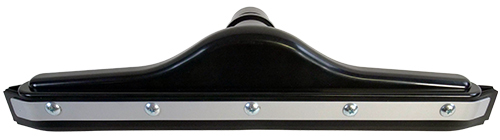
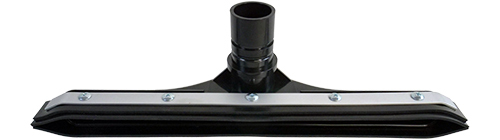
Neoprene is a versatile choice for general-purpose commercial and industrial vacuum squeegee applications. It works across smooth, rough, and abrasive surfaces, making it useful when cleaning conditions are likely to vary.
Neoprene provides resistance to swelling and softening from some exposure to petroleum oils, organic oils, and chemical slurries. It also provides good resistance to routine UV exposure and maintains a sharp cleaning edge for effective liquid collection.
Best Applications for Neoprene
Neoprene vacuum squeegee blades can be a good choice for:
-
Automotive shops
-
Commercial kitchens
-
Concrete resurfacing
-
Contract cleaning services
-
Facilities with multiple floor types
-
Applications with changing environmental conditions
-
Indoor and outdoor cleaning applications
The tradeoff is that neoprene gives up some of the flexibility of natural rubber when recovering large volumes of liquid from smooth surfaces.
For very frequent use on abrasive floors or repeated exposure to petrochemical or organic oils, TPE or Buna-N may be a better choice.
TPE Vacuum Squeegee Blades
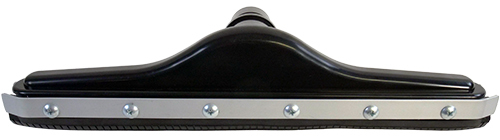
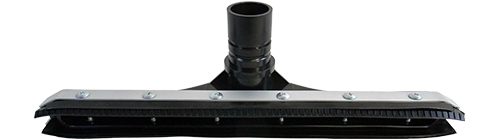
TPE, or thermoplastic elastomer, is designed for applications where durability and frequent use are important. It is particularly well suited for rough or abrasive floors where a less durable blade material may wear more quickly.
TPE retains a sharp leading edge, making it effective for liquid recovery as well as liquid slurry applications. It also provides broad temperature stability for both indoor and outdoor use.
TPE offers resistance to mild petrochemical oils, organic oils, and chemicals similar to that provided by neoprene. At the same time, the blade remains flexible enough to follow rough and textured surfaces.
Best Applications for TPE
TPE vacuum squeegee blades are a strong choice for:
-
Industrial facilities
-
Rough concrete floors
-
Abrasive surfaces
-
High-frequency cleaning
-
Extended-duration cleaning
-
Liquid and slurry recovery
-
Indoor and outdoor applications
-
Applications with mild oil or chemical exposure
TPE represents a cost-effective step up from neoprene when frequency of use and surface abrasiveness increase. For demanding industrial environments, the additional durability can make TPE a better long-term value.
Buna-N Vacuum Squeegee Blades
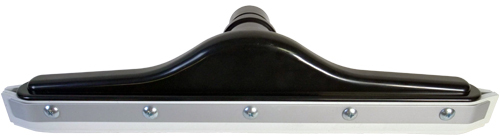
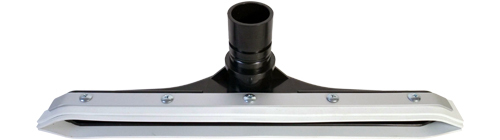
Buna-N blades are typically identified by their white color. Of the four common materials, Buna-N is particularly well suited for applications involving frequent exposure to petroleum-based oils, grease, diesel, and gasoline residue.
Buna-N resists swelling and softening when exposed to oils, allowing the blade to maintain its shape and cleaning performance.
It is also an excellent option for commercial kitchens and food preparation environments where organic cooking oils and fats are present. Buna-N maintains a sharp scraping edge under suction, helping with liquid and chemical collection.
Best Applications for Buna-N
Buna-N vacuum squeegee blades are particularly useful in:
-
Automotive shops
-
Garages
-
Commercial kitchens
-
Food preparation areas
-
Walk-in food storage freezers
-
Areas exposed to cooking oils and fats
-
Applications involving petroleum oils, grease, diesel, or gasoline residue
The primary limitation of Buna-N is UV exposure. Prolonged exposure to ultraviolet light can cause the material to stiffen and eventually crack, reducing its effectiveness.
For applications with significant outdoor or direct sunlight exposure, another blade material may be a better choice.
How to Choose the Right Commercial Vacuum Squeegee Blade
Selecting a commercial vacuum squeegee blade comes down to matching the material to the conditions it will encounter.
Consider the Floor Surface
Start with the floor itself. Natural rubber provides excellent flexibility and liquid recovery on smooth floors, while TPE is better suited to rough and abrasive surfaces.
If the squeegee will regularly move between different floor types, neoprene provides a versatile middle ground.
Consider Exposure to Oils and Chemicals
The substances being recovered are equally important.
Petroleum oils, diesel, gasoline, grease, cooking oils, fats, and chemicals can affect blade materials differently. Buna-N is particularly well suited to heavy oil and grease exposure, while neoprene and TPE provide broader resistance for many general-purpose applications.
Natural rubber should generally be avoided where repeated petroleum or organic oil exposure is expected.
Consider Frequency of Use
A squeegee used occasionally in a school or office has different requirements from one used continuously in an industrial facility.
For frequent or extended use, investing in a more durable blade material such as TPE can provide better long-term value, particularly on abrasive surfaces.
Consider Temperature and UV Exposure
Temperature and sunlight can also affect blade performance. Natural rubber and TPE offer broad temperature flexibility, while neoprene is particularly useful where routine UV exposure is expected.
Buna-N, while excellent for oil and grease resistance, can deteriorate under prolonged UV exposure.
Look for a Reinforced Vacuum Squeegee Design
Blade material is only part of the equation. A well-designed industrial vacuum squeegee should also provide adequate support for the blade.
Look for a squeegee design where the primary blade is reinforced by a secondary blade. The secondary blade helps maintain support and stability during operation, allowing the primary blade to maintain consistent contact with the floor.
This can be especially important during high-volume liquid recovery and when working across uneven, rough, or textured surfaces.
Which Vacuum Squeegee Blade Is Best for Your Application?
There is no single blade material that is best for every commercial cleaning application.
Choose natural rubber when maximum flexibility and high-volume liquid recovery on smooth floors are the priorities.
Choose neoprene when you need a versatile, general-purpose blade capable of handling a variety of surfaces and conditions.
Choose TPE when frequent use, rough or abrasive floors, and long-term durability are major considerations.
Choose Buna-N when frequent exposure to petroleum oils, grease, diesel, gasoline residue, cooking oils, or fats is the primary concern.
By matching the vacuum squeegee blade material to your floor surface, exposure conditions, and frequency of use, you can improve cleaning performance while getting better long-term value from your equipment.